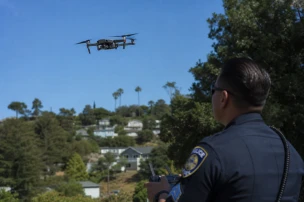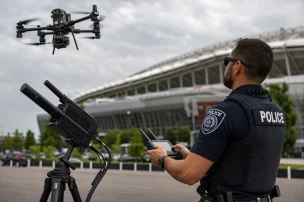

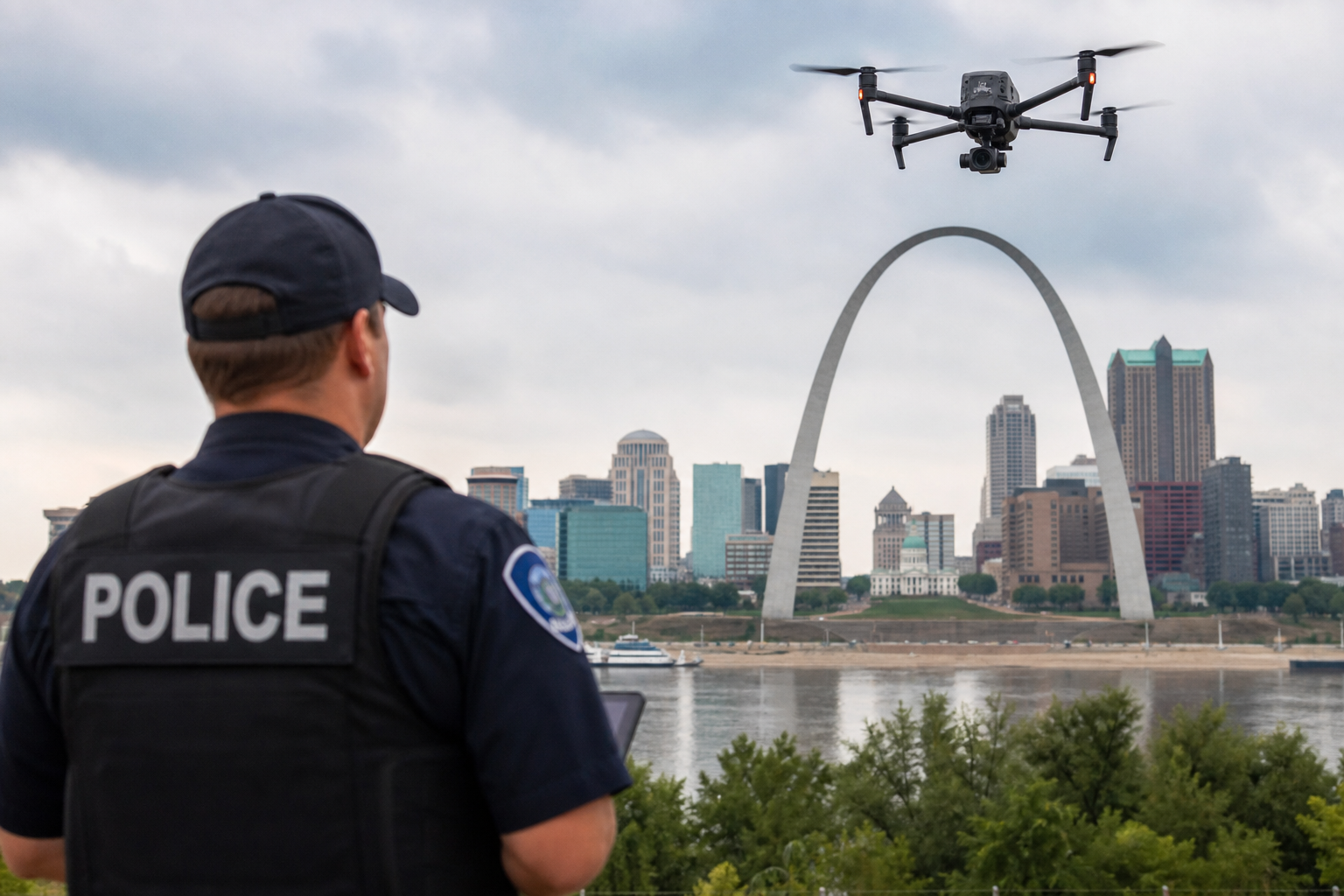
St. Louis Metropolitan Police Department officers will receive live aerial video within seconds of 911 dispatches under a newly approved drone program.
The department proposed the Aerial Response Unit on May 26, 2026. The plan calls for six BRINC drones housed in docking stations covering the North, Central, and South patrol areas. Station locations were chosen according to historical crime patterns and 911 volume data.
The St. Louis Board of Police Commissioners approved the program on May 27. Chief Robert Tracy received formal authorization to proceed with acquisition and deployment.
"Drone technology has the ability to enhance officer safety, improve response to 911 calls, provide critical situational awareness during rapidly evolving incidents, and support our officers with real-time information when seconds matter most."
Maj. Joseph Morici leads the Aerial Response Unit project. He outlined how the system will operate in practice.
"This is an operational model that deploys drones to calls for service, often arriving before the officer, giving situational awareness and improving officer safety."
Drones will launch automatically from fixed docking stations positioned throughout the three patrol zones. The aircraft are expected to reach most incidents in roughly 70 seconds. Officers will receive streaming video on mobile devices to evaluate scene conditions before arrival.
Funding comes through a partnership with the St. Louis Police Foundation. The drones carry no weapons and will not perform routine patrols. Launches occur only in response to active 911 calls.
STLPR.org reported the initial proposal and board approval. GovTech.com confirmed that all six units should reach operational status by the end of 2026. The department’s official site lists the primary goals as officer safety and real-time situational awareness.
The technical setup allows rapid launch without on-scene personnel. Pre-positioned docks reduce deployment time compared with manual drone operations used by many agencies. Live feeds give responding units precise information on suspect locations, vehicle descriptions, and potential hazards.
Law enforcement agencies continue to evaluate similar drone-as-first-responder models. The St. Louis program provides a documented example of how docking stations and trend-based placement can integrate into existing dispatch protocols.