

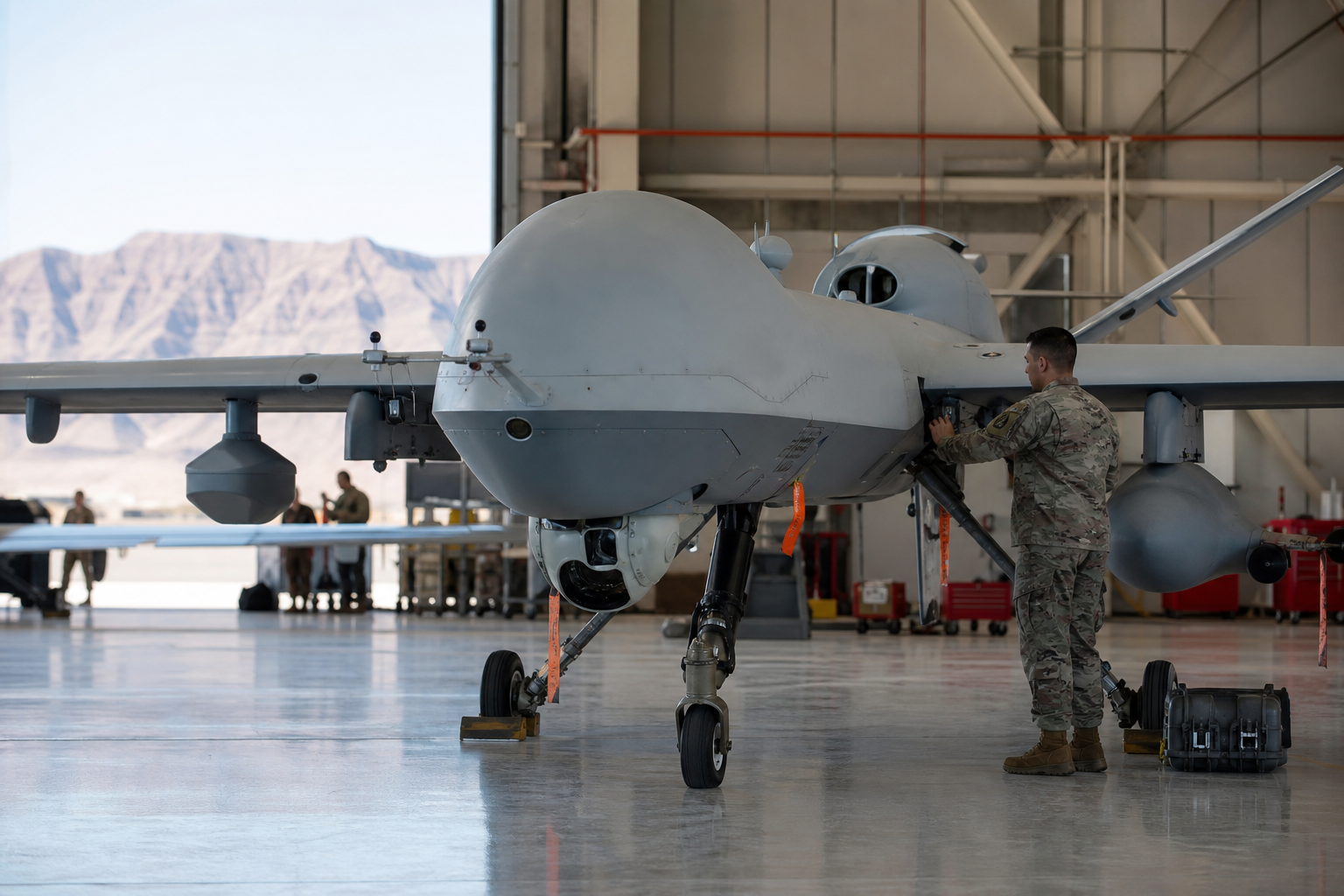
The U.S. Air Force MQ-9 Reaper fleet has declined from 165 aircraft at the start of fiscal year 2026 to roughly 135 after sustained combat losses.
On June 11, 2026, the Senate Armed Services Committee inserted language into the fiscal year 2027 National Defense Authorization Act that requires the Air Force to increase its MQ-9 inventory by 2028 and limits additional divestments.
General Atomics closed the MQ-9A production line in 2025, leaving lawmakers to consider restarting manufacturing or purchasing remaining airframes.
During a May 13, 2026 Senate hearing, Lt. Gen. David Tabor, Air Force deputy chief of staff for plans and programs, confirmed the reduced fleet size and outlined recovery options. "We are concerned about how they’ve attrited, and we’re looking at options to buy back as many of the MQ-9As as we possibly can right now," Tabor stated.
Air & Space Forces Magazine reported that the committee explicitly wants the Air Force to expand the Reaper fleet. The inventory drop stems primarily from operations in Operation Epic Fury, which included missions over Iran and Yemen.
Defense News and Air Force Times coverage of the hearing noted that senators are examining both new production and acquisition of existing airframes to reach prior strength levels. Military Watch Magazine highlighted the June 2026 legislative push as a direct response to the documented decline from 165 to 135 aircraft.
The approved NDAA language sets a target inventory growth timeline through 2028 while restricting further retirements without congressional approval. Law enforcement and security agencies that rely on similar unmanned systems for surveillance and reconnaissance operations continue to monitor the outcome, given the MQ-9’s established role in persistent intelligence collection.
Committee staff have indicated that final bill language will be reconciled with the House version later this summer. No specific funding figures have been released, though the measure directs the service to submit a detailed restoration plan within 180 days of enactment.