
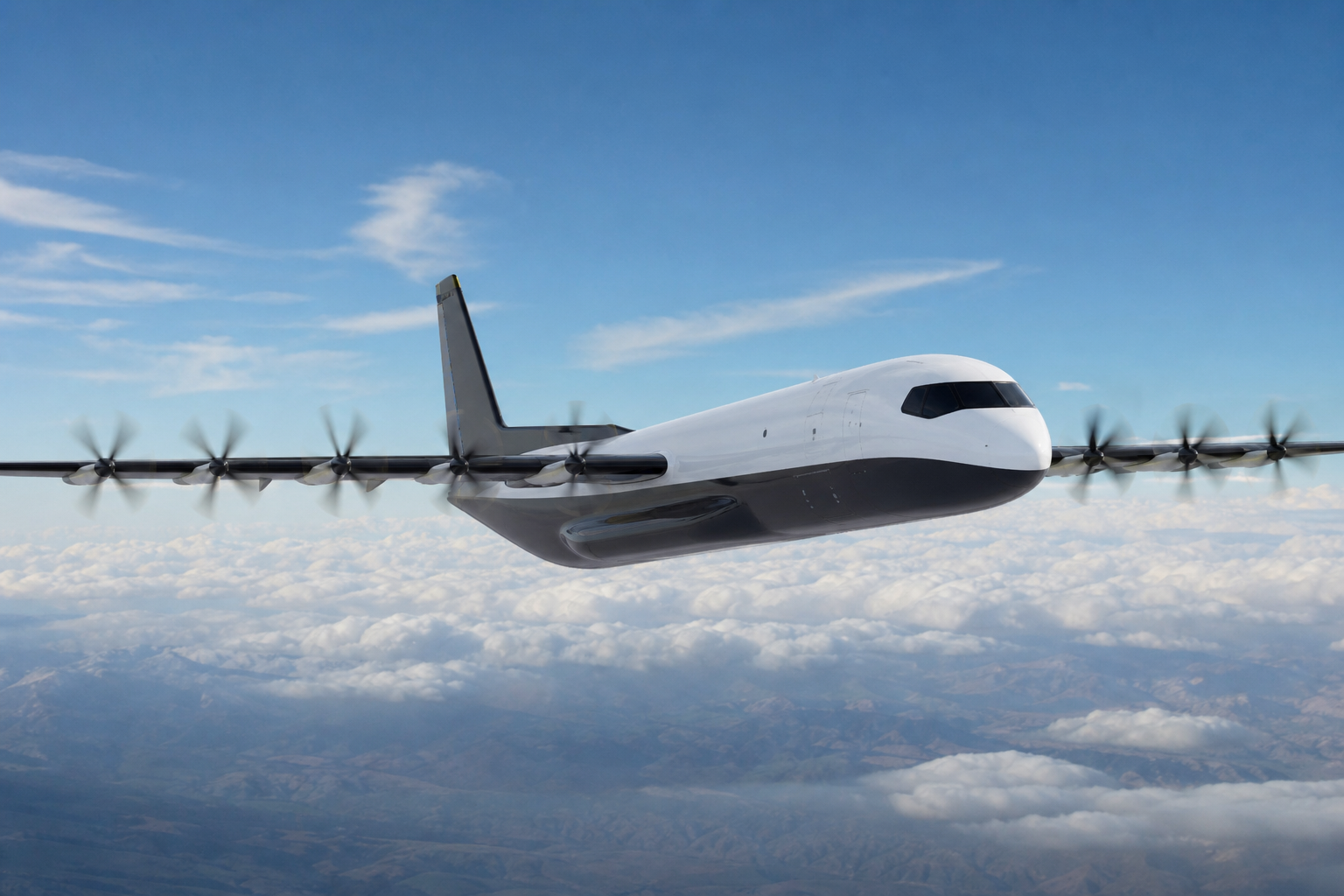
Electra has introduced a turbo-electric airliner concept featuring innovative airframe and propulsion elements to advance commercial aviation performance.
The company disclosed the design on June 8, 2026, in Manassas, Virginia, as its contribution to NASA’s AACES 2050 program.
This configuration uses a double-bubble lifting fuselage along with electric tail fans that incorporate boundary layer ingestion. The aircraft targets capacity for more than 100 passengers.
Analyses conducted by Electra suggest the integrated system could deliver efficiency gains reaching 17 percent above projected 2050 baselines from improvements in structures, engines, and aerodynamics alone.
The value of electrification in this concept is that it lets us put the propulsion where it couldn’t go before but does the most good, according to Dr. Parker Vascik, Director of Product Strategy at Electra.
This concept builds on years of research into how airframe shape and propulsion placement can work together to improve aircraft efficiency, Dr. Alejandra Uranga, Chief Engineer for Research and Future Concepts at Electra, stated.
Boundary layer ingestion at the tail reduces the momentum deficit in the aircraft wake, thereby lowering the energy required for propulsion. The double-bubble shape increases the effective wing area without extending the span, which aids in airport compatibility and structural efficiency.
Electra developed the concept to explore how hybrid propulsion can complement aerodynamic advancements in next-generation airliners. The company continues to refine modeling and simulation tools to validate the projected performance benefits.
The turbo-electric system generates electricity from wing-mounted turbogenerators to power the tail fans, allowing flexible distribution of thrust. This setup avoids the weight penalties associated with fully electric batteries for large aircraft while capturing the benefits of electric drive.
Further development will focus on component testing and integration studies to determine the feasibility of scaling the concept to commercial production. Electra expects ongoing collaboration with NASA researchers throughout the program duration.
Participation in the NASA AACES 2050 effort positions Electra among organizations working on technologies that could reshape long-term fleet planning for major carriers.