
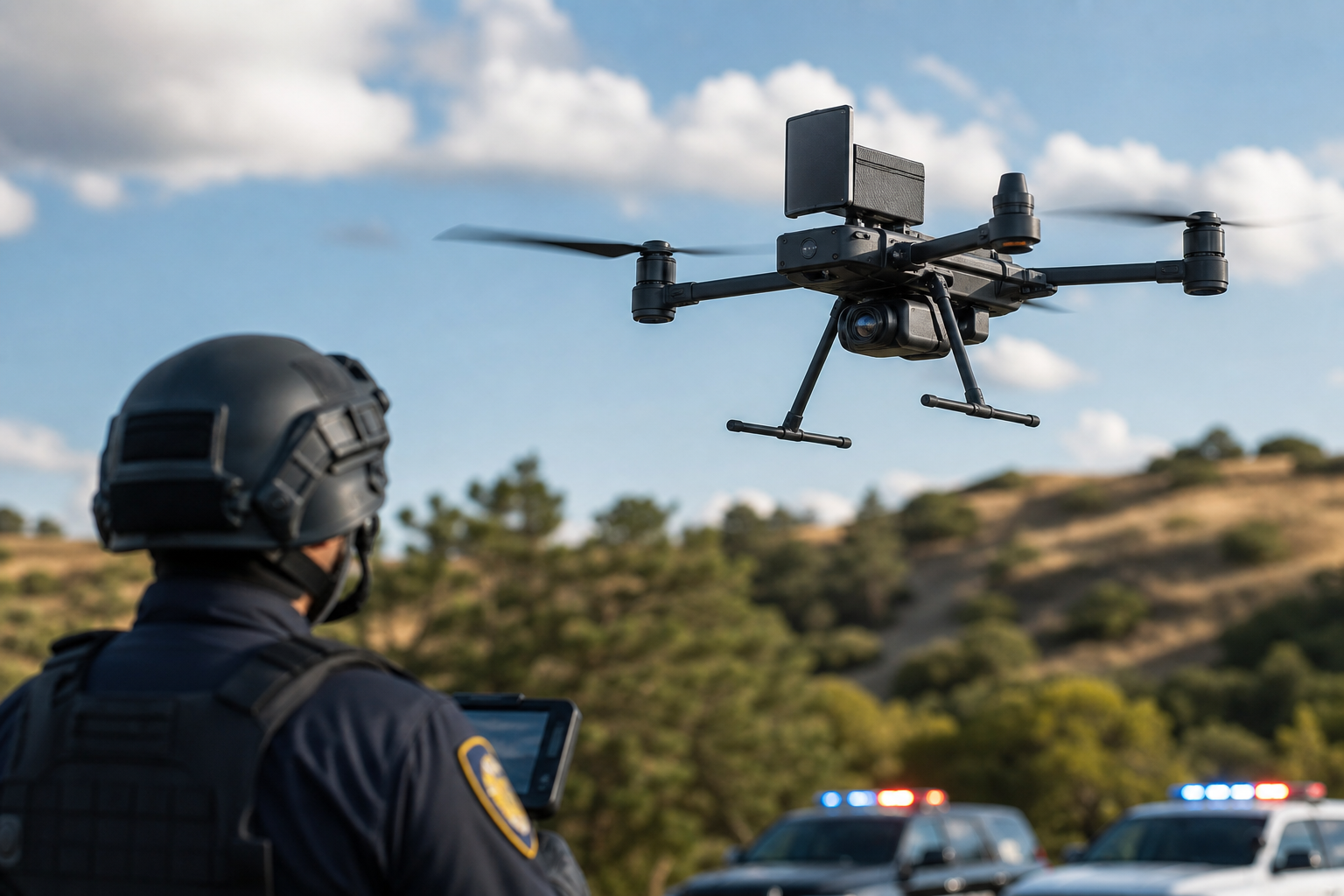
Police and first responder drone fleets gain precise low-altitude detection tools through a new radar integration that addresses growing airspace complexity.
Echodyne and Axon announced the partnership on May 27, 2026, to embed Echodyne MESA radar into Axon’s public safety drone ecosystem, including Axon Air and Dedrone platforms.
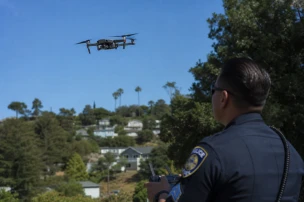
The technology supplies continuous airspace awareness that distinguishes authorized unmanned aircraft from rogue drones, supporting law enforcement, homeland security, and Drone as First Responder missions.
Agencies already conduct hundreds of DFR operations daily, with dozens of additional deployments underway across the United States and globally.
Radar is the cornerstone of airspace awareness and is especially important for the low altitude drone airspace where remotely piloted and, eventually, semi- and fully-autonomous UAS will operate. Our work with Axon is focused on a shared safety mission - delivering innovative solutions for public safety agencies protecting communities and infrastructure.
Eben Frankenberg, CEO of Echodyne, emphasized the focus on operational safety for public safety users.
The radar layer enables departments to maintain safe separation while expanding flight hours in urban and suburban environments where visual observers alone cannot provide sufficient coverage.
Public safety agencies are increasingly relying on drones to deliver critical information faster, improve coordination, and help protect both responders and the communities they serve. As these programs scale, agencies need trusted technologies that help them operate safely and confidently in increasingly complex airspace environments. We’re excited to work with Echodyne to support the infrastructure that will help enable the next generation of public safety drone operations.
Eric Hertz, Executive Vice President of Operations at Axon, noted the requirement for reliable detection as flight volumes increase.
Sheriff offices, highway patrol units, and municipal police departments receive a technical foundation that supports both current manned operations and future autonomous drone coordination without introducing new collision risks.