
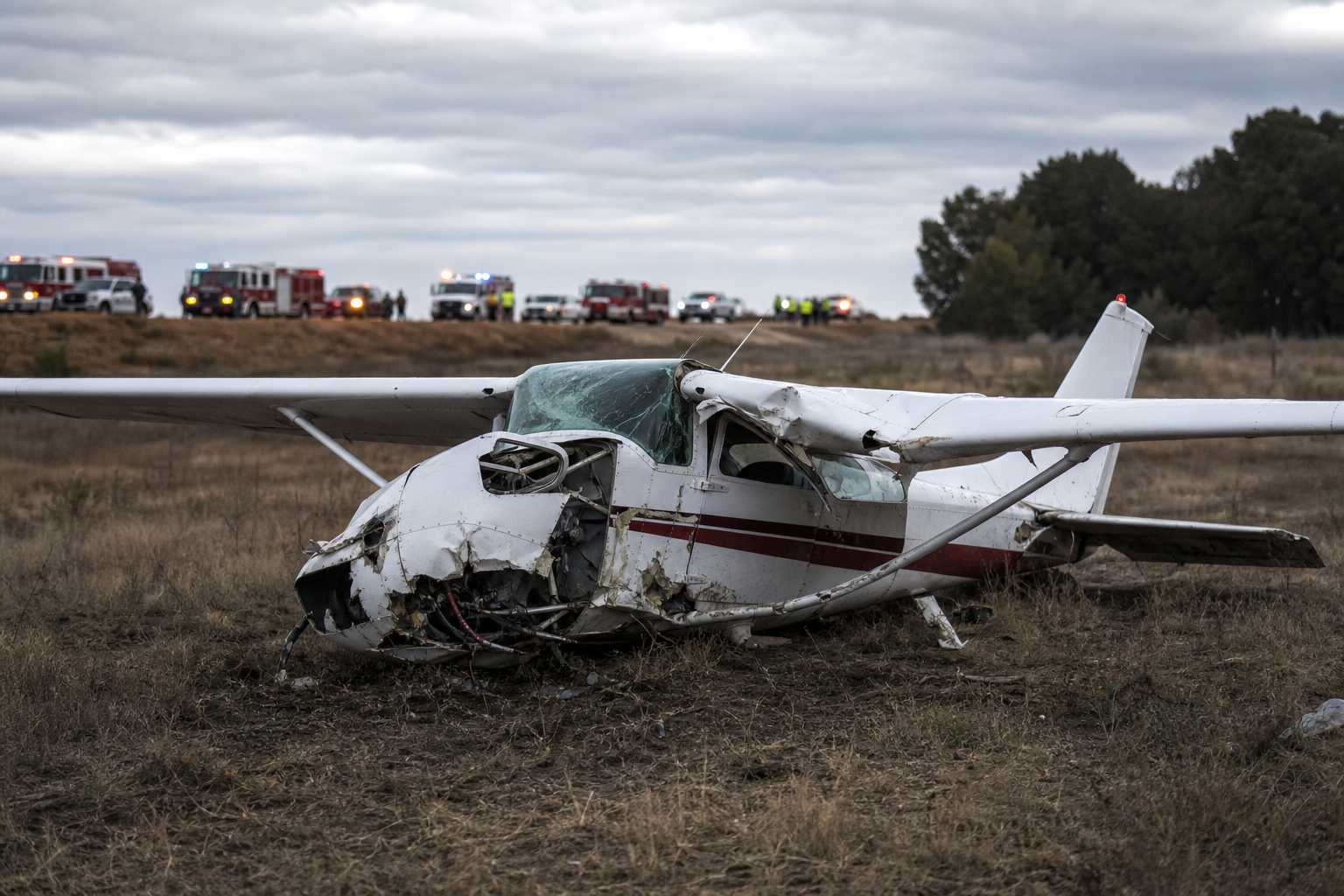
Engine failure forced a Cessna 172P to crash inverted shortly after departure from runway 28R at North Perry Airport.
The aircraft, registered N96100, came down near South Florida State Hospital in Pembroke Pines, Florida, at approximately 11:30 a.m. on May 29, 2026.
Two women aboard sustained minor to moderate injuries. Rescue crews transported them to Memorial Regional Hospital. No ground injuries occurred.
The crash has renewed focus on aviation safety at North Perry Airport. Records show 35 to 40 accidents involving aircraft departing the facility in the past five years.
Attorney Zach Gorwitz addressed the pattern during statements to local media.
"In the last five years, we’ve had over 35 accidents with aircraft taking off from North Perry Airport."
Community members expressed frustration with the repeated events. One local official described the situation as familiar.
"Here we go again with North Perry Airport. It is a routine thing in Pembroke Pines where these crashes continue to happen."
Federal Aviation Administration personnel have opened an investigation into the engine failure and aircraft performance. Local10.com and CBS News Miami documented initial findings from the scene.
Aviation-Safety.net logged the precise location and airframe details for the N96100 incident.
Law enforcement and emergency response units in the area maintain established protocols for aviation incidents near populated zones and medical facilities. The latest event prompts review of coordination procedures between airport operations and first responders.
Authorities continue to assess potential improvements to takeoff monitoring and maintenance verification at general aviation airports with similar traffic volumes.
Investigators are examining the maintenance records of the aircraft to determine if any prior issues with the engine were overlooked. The Cessna 172P model is widely used for flight training and personal use across the United States.
North Perry Airport serves as a hub for many flight schools and private pilots, leading to high traffic density that can strain safety protocols. The proximity to residential areas and hospitals raises concerns about emergency landing options.
Similar incidents in the past have led to calls for better pilot training and stricter enforcement of pre-flight checks. The community hopes that this latest crash will prompt meaningful changes to prevent future tragedies.
Residents living near the airport have formed groups to advocate for improved safety measures and increased monitoring of flight operations. Their efforts highlight the need for balance between aviation activities and public safety in urban environments.