

Pilots disabling ADS-B transponders near fee-charging airports undermine the reliability of collision avoidance data relied upon across U.S. airspace.
On May 20, 2026, the Aircraft Owners and Pilots Association issued a press release endorsing FAA Administrator Bryan Bedford's testimony before the Senate Aviation Subcommittee. Bedford directly addressed the original purpose of ADS-B when questioned about billing applications. "No, sir. It was intended to be a safety and situational awareness tool," he stated.
AOPA Senior Vice President of Government Affairs and Advocacy Jim Coon reinforced the position. "Senator Sheehy is spot on with his observations regarding the misuse of an aircraft collision avoidance technology to collect taxes and fees," Coon said in the release.
At least a dozen states now consider or have enacted legislation restricting ADS-B data for fee collection. Florida Governor Ron DeSantis signed SB 422 into law, with the measure taking effect July 1, 2026. More than 100 airports currently impose fees tied to aircraft operations, creating direct financial incentives that some pilots seek to avoid.
Reports compiled by AVweb in May 2026 documented instances of pilots switching off ADS-B equipment when approaching airports that bill based on broadcast data. Such actions reduce aircraft visibility to air traffic control, nearby traffic, and ground-based monitoring systems used by law enforcement for airspace security.
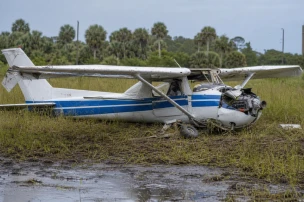
The 67 fatalities recorded in a 2025 mid-air collision underscored the consequences of incomplete situational awareness. Universal conspicuity depends on consistent ADS-B participation from all operators. When trust in the system erodes, both crewed general aviation and uncrewed aircraft operations face degraded detection capabilities.
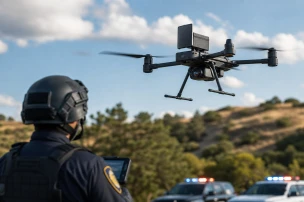
Drone mitigation platforms and behavioral intelligence tools employed by sheriff offices and highway patrol units integrate ADS-B feeds to maintain real-time airspace pictures. Reduced broadcast compliance narrows the effectiveness of these systems, particularly where drones share low-altitude corridors with manned traffic.
AOPA's intervention frames the billing debate as a direct threat to the safety foundation ADS-B was designed to provide. State-level prohibitions and federal resistance now converge on preserving the technology's core function rather than expanding its administrative uses.