
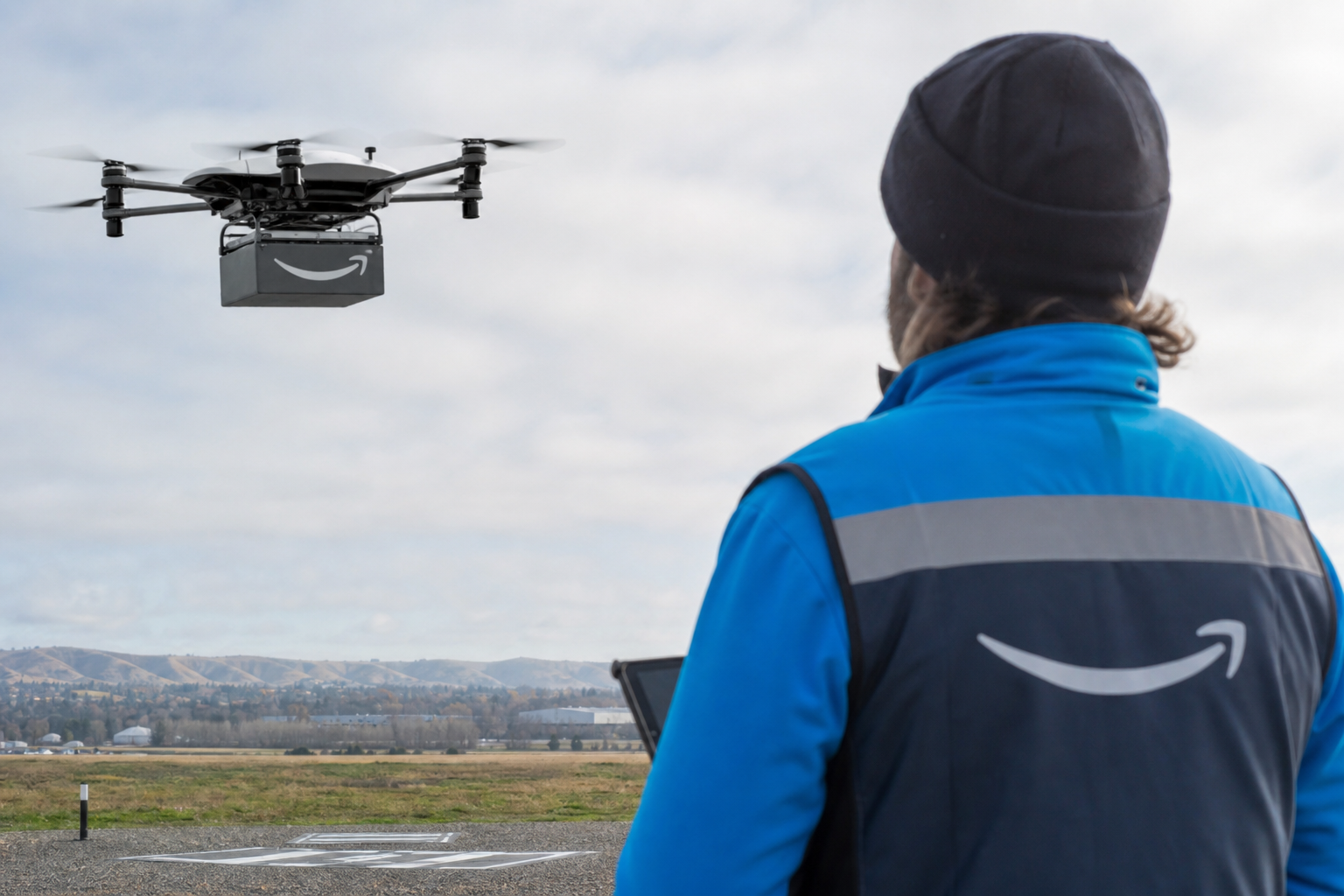
Nampa planning commissioners prepare to evaluate Amazon's application for a Prime Air drone delivery hub that would introduce commercial drone operations across the Treasure Valley.
The Nampa Planning and Zoning Commission is scheduled to review the conditional use permit on May 26, 2026, at the existing fulfillment center at 5319 E. Franklin Road. The proposal calls for a 21,000-square-foot fenced facility that would remove 114 parking spaces from the site.
Amazon intends to operate MK-30 drones, each weighing 85 pounds and limited to packages of 5 pounds or less. These aircraft would fly within a 7.5-mile radius, covering roughly 176 square miles that includes Nampa, Meridian, Star, Middleton, Kuna and portions of Boise.
The company projects operations could begin by the end of 2026 if local and federal approvals are secured. The hub would initially field 12 to 15 drones and employ approximately 30 people in operator and maintenance roles.
Amazon requires separate Federal Aviation Administration authorization before any flights can commence. The company issued a statement to the Idaho Statesman confirming its intent to expand Prime Air service in the area while working with local officials.
We are always exploring new ways to get customers a wider selection at faster speeds. Prime Air currently delivers to customers in locations across the country and the response from customers using Prime Air has been overwhelmingly positive. We are currently working with local officials and evaluating opportunities to expand our fast, reliable drone delivery service to reach customers in the Nampa area.
Resident concerns over privacy, noise and safety have surfaced in public meetings, according to coverage by KIVI-TV. BoiseDev reported that the application includes detailed radius maps and operational parameters now under review by planning staff.
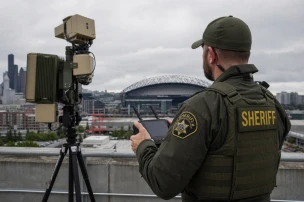
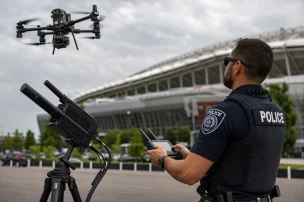
For law enforcement and security agencies monitoring the Treasure Valley, the MK-30 specifications and planned flight density present new variables for airspace awareness and potential integration with drone detection systems. The 85-pound airframe size and 7.5-mile operational envelope require precise coordination with existing aviation and public safety protocols.