
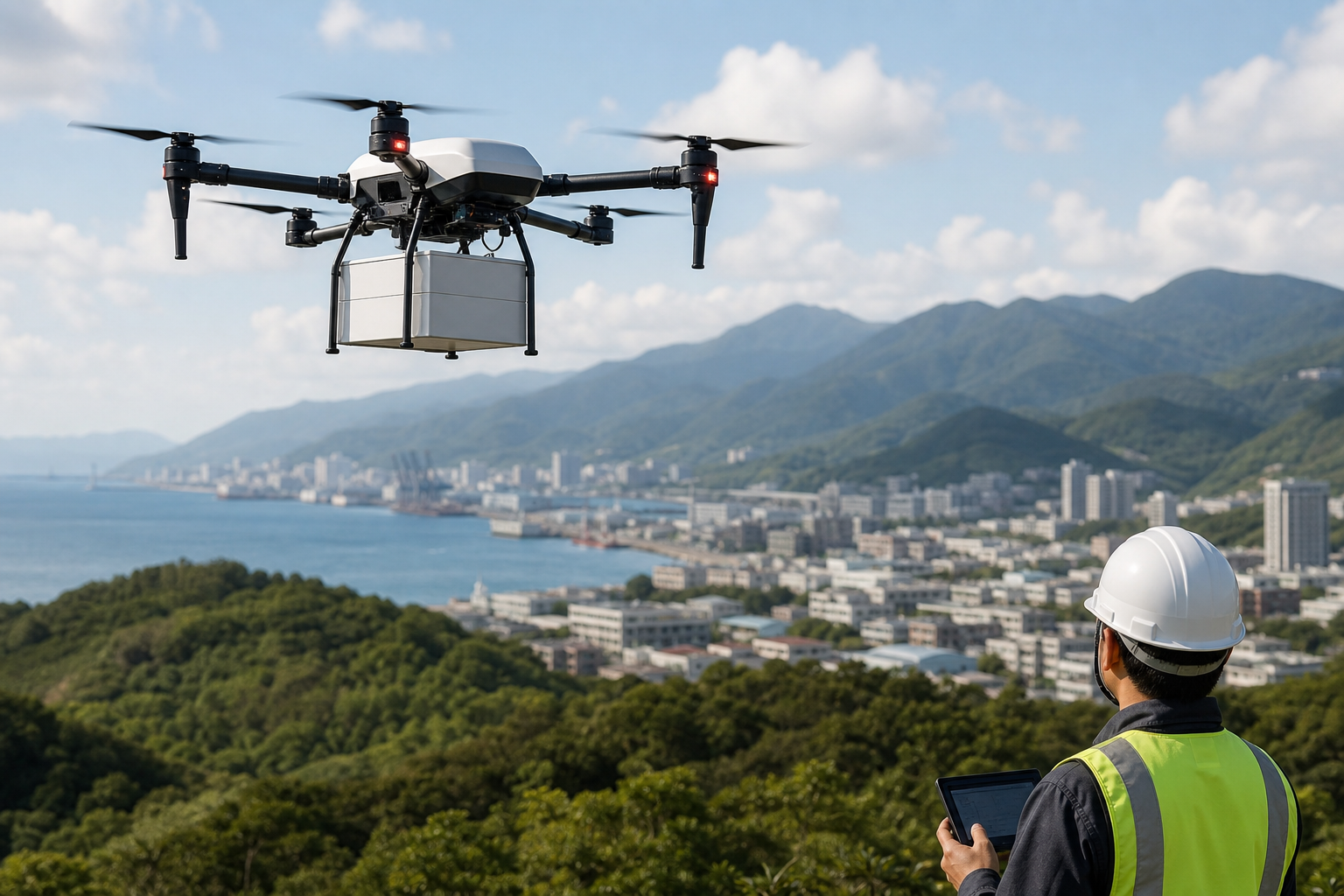
Taiwan's Civil Aviation Administration is preparing to scale up drone delivery operations across the entire country through the addition of new flight routes and the introduction of comprehensive regulations.
The announcement, made on May 27, 2026, marks a step in integrating unmanned aerial systems into everyday logistics, particularly for commercial purposes. Currently, 24 drone transport routes are operational, connecting key locations including Chiayi, Xiaoliuqiu, and various remote areas in Taoyuan, Hsinchu, and Pingtung.
These existing routes have primarily supported medical deliveries and transport to isolated regions, demonstrating the reliability of drone technology in challenging environments. The planned expansion will build on this foundation to include more commercial delivery applications, potentially transforming supply chains in both urban and rural settings.
According to Taiwan News, the administration highlighted the success of the current 24 routes as a basis for further growth. "The administration noted 24 drone transport routes are in use, including Chiayi, Xiaoliuqiu, and remote areas in Taoyuan, Hsinchu, Pingtung, and other sites," stated Taiwan News Staff, Reporter.
Security professionals monitoring airspace activities will likely see increased drone traffic as a result of these changes. This development underscores the need for advanced drone detection and mitigation tools to distinguish between authorized commercial operations and potential security threats.
The Ministry of Economic Affairs has also been involved in supporting the drone industry growth, providing regulatory backing for these commercial applications. This coordinated effort between aviation authorities and economic planners aims to foster innovation while maintaining strict safety standards.
New regulations are expected to address flight permissions, operator certifications, and integration with existing air traffic control systems. Such measures will ensure that the expansion does not compromise national security or public safety.
Remote areas stand to benefit greatly from improved delivery times for essential goods, while commercial entities can explore new business models involving drone fleets. The focus remains on responsible deployment, with emphasis on compliance and monitoring.
To facilitate this, the CAA is likely to introduce digital tracking requirements and real-time reporting mechanisms. These tools could prove valuable for investigators using behavioral intelligence systems when monitoring mixed drone traffic environments. Overall the initiative supports broader economic goals through technology adoption.