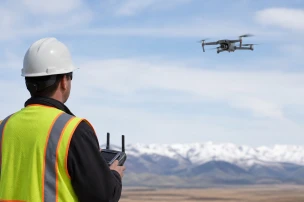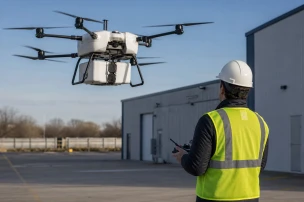

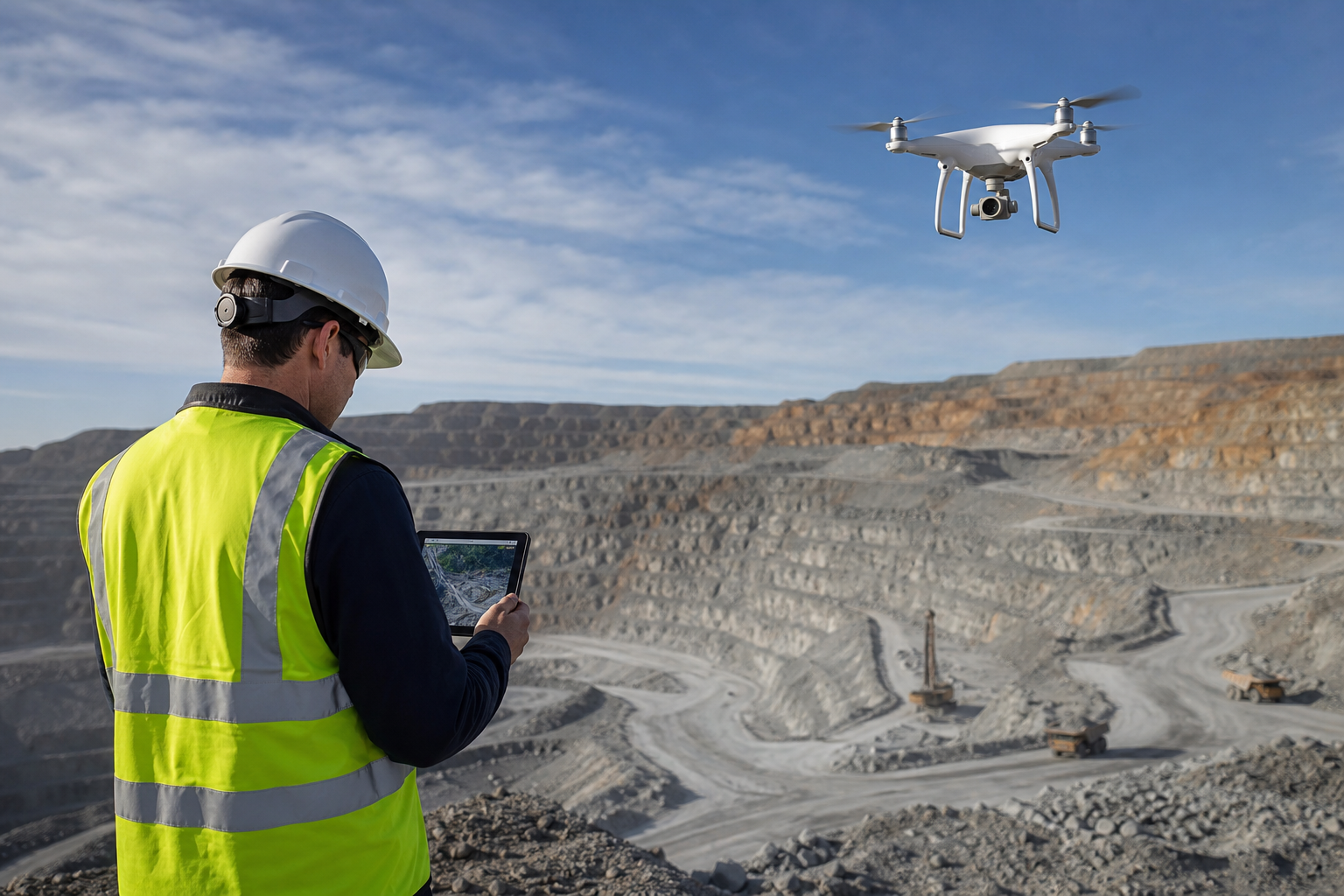
Advanced drone systems are supplying mining operations with real-time spatial data at centimeter-level precision and dramatically reduced collection times.
The April 24, 2026 Drone Mapping Guide published by SPH Engineering confirms that photogrammetry routinely achieves 2-3 cm horizontal accuracy. Mining teams apply this data to calculate stockpile volumes and track pit wall stability without repeated ground surveys.
A DJI Matrice 400 carrying the Zenmuse L3 LiDAR payload recently mapped a 650 m deep gold mine in 15 minutes while streaming a live point cloud. Traditional methods for the same volume of data previously required several hours of manual effort.
Using drone photogrammetry with Correlator3D, our clients measure stockpiles and excavation progress with high accuracy. It improves planning, reduces manual effort, and increases safety.
Carlson Software reports accelerating adoption of drone mapping and photogrammetry across mining operations throughout 2026. The technology supplies continuously updated terrain models that support both production tracking and safety compliance.
Reports from UAV Coach dated April 5, 2026 and Dronelife dated September 9, 2025 document parallel deployments at marble quarries and excavation sites. These cases demonstrate consistent gains in volumetric accuracy and reduced personnel exposure to hazardous terrain.
Security and law enforcement agencies responsible for industrial site protection can apply the same sensor workflows. Real-time point clouds and orthomosaics enhance perimeter monitoring, incident documentation, and terrain analysis at large facilities where rapid spatial updates are required.