
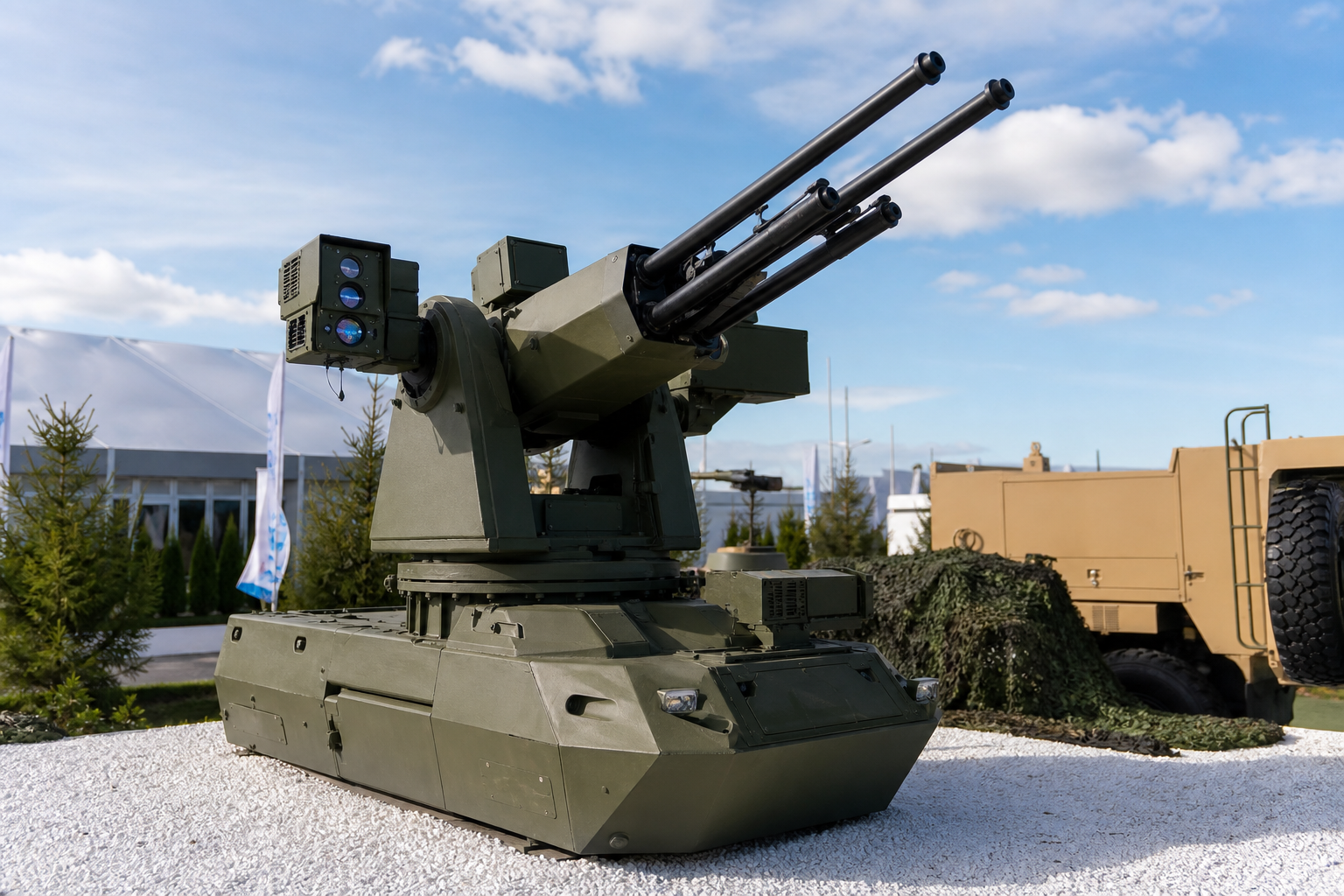
Russia's Rostec corporation introduced the ZAK-30 Citadel air defense system on May 25, 2026, to neutralize drone threats with automated smart munitions.
The platform made its debut at the First International Security Forum held in the Moscow Region from May 26 to 29. It integrates a 30mm autocannon with programmable proximity-fuzed shrapnel shells that feature remote-controlled fuses. These munitions detonate at calculated points along the target trajectory rather than requiring direct impact.
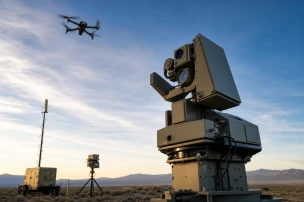
Detection and tracking rely on networked electro-optical and infrared cameras paired with radar sensors. The system achieves engagement ranges of 2,000 meters against fixed-wing drones and 1,000 meters against multirotor platforms. It provides continuous 24-hour protection for stationary sites through automated fire control.
Rostec State Corporation stated that the Citadel counters various enemy drone types through automation and smart projectiles, with performance already validated in real combat conditions.
According to coverage by TASS, the announcement highlighted the system's integration of remote fuse technology for precise airburst effects. Defence Blog reported the approximate unit cost of 600 million rubles, equivalent to roughly 8 million dollars, along with detailed sensor and ammunition specifications. TURDEF confirmed the networked airburst counter-unmanned aerial system features during the unveiling.
The autocannon fires shrapnel rounds designed to create lethal fragmentation clouds at predetermined distances. This approach increases hit probability against small, fast-moving aerial targets compared with conventional ammunition. Law enforcement and security agencies monitoring foreign counter-drone developments may note the emphasis on automated, sensor-fused engagement for perimeter defense applications.
Technical integration allows the Citadel to operate as a standalone unit or within a broader sensor network. The combination of radar and electro-optical tracking supports target classification and prioritization in mixed drone environments. Real-world combat validation cited by the manufacturer indicates reliability under operational stress.
Procurement considerations for similar systems typically factor ammunition logistics and maintenance requirements alongside initial acquisition costs. The Citadel's design focuses on rapid response to both fixed-wing and rotary-wing unmanned threats at short to medium ranges.