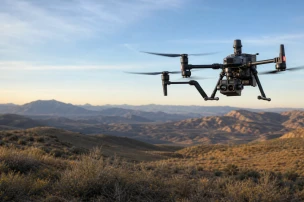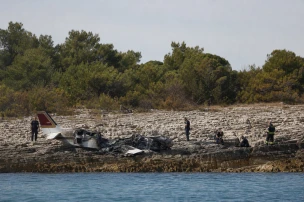

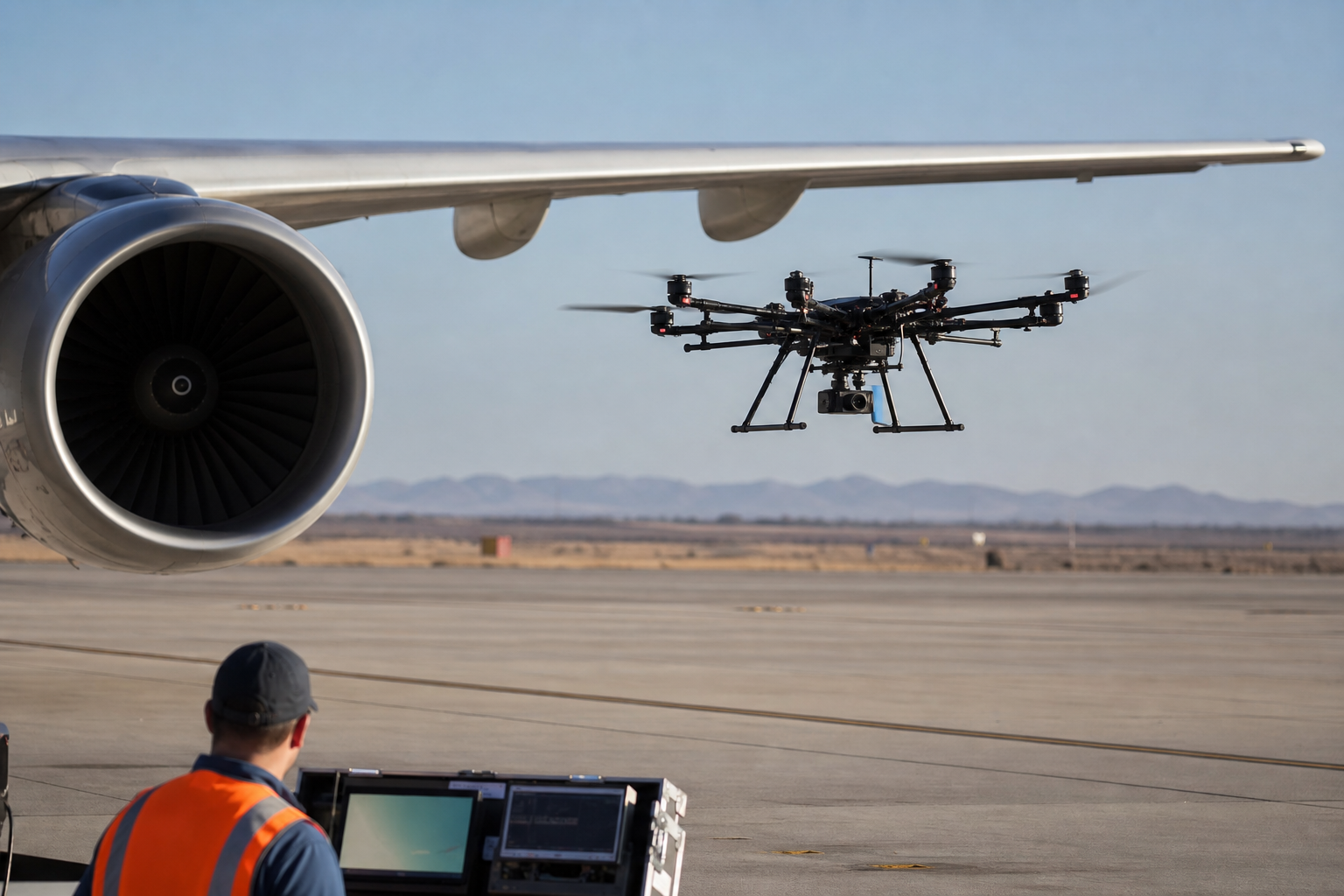
A 1.216 kg DJI Phantom 3 unmanned aircraft system disintegrated on contact with the rotating fan of a CFM56-7B turbofan engine spinning at 5,175 RPM during a controlled ingestion test at Naval Air Weapons Station China Lake.
The Task A43 final report, released September 10, 2025, recorded the event at an approach speed of 92.6 m/s, equivalent to 180 knots. Damage reached severity level 3 on the engine certification scale. The UAS was fully obliterated, producing measurable blade deformation and a steady-state imbalance that remained inside the engine's certified operating envelope.
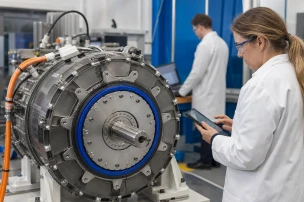
ASSURE researchers conducted the live test to generate benchmark data for high-bypass turbofan ingestion scenarios. The physical trial used an open representative fan model that replicated the actual CFM56-7B geometry and material properties.
In May 2026, sUAS News published a comprehensive review of the Task A43 dataset. Analysts compared high-speed video, post-test teardown measurements, and force-time histories against LS-DYNA finite-element simulations. Kinematics, blade damage patterns, and residual imbalance values aligned within acceptable engineering tolerances.
"The physical test results aligned closely with our computational models, validating the approach for future safety assessments," said Dr. Alan Reed, principal investigator for ASSURE Task A43. "This correlation allows regulators and operators to rely on simulation for evaluating a wider range of UAS masses and impact conditions without repeated live tests."
Captain Laura Mendes, test director at NAWC China Lake, noted the controlled conditions enabled precise instrumentation. "We captured blade strain, rotor dynamics, and containment response at microsecond resolution," she stated. "Those data points now anchor the models used by certification authorities."
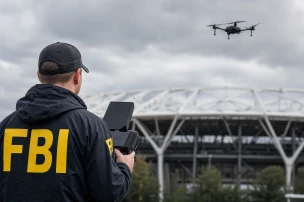
Security analysts tracking unauthorized drone activity near airports can apply the validated models to estimate potential engine damage from specific UAS platforms. The confirmed severity level 3 outcome for a 1.216 kg vehicle at 180 knots supplies a quantitative reference for risk assessments conducted by federal and state law enforcement aviation units.
Dr. Michael Torres, ASSURE modeling lead, emphasized the open fan geometry used in both test and simulation. "Because the representative fan matches production CFM56-7B characteristics, the results transfer directly to fleet aircraft," he said. "Agencies evaluating counter-UAS tactics now have a verified tool for predicting outcomes of drone incursions."
Rebecca Kline, aviation safety analyst at the FAA's UAS Integration Office, observed that the Task A43 data set supports ongoing work on detect-and-avoid standards. "Validated ingestion models help define safe separation distances and inform mitigation system performance requirements," she said.
The ASSURE project continues to release additional simulation cases derived from the validated baseline. These datasets are intended for use by engine manufacturers, airport security teams, and investigative agencies assessing UAS-related incidents.